AED Buyer’s Guide for Untrained Responders
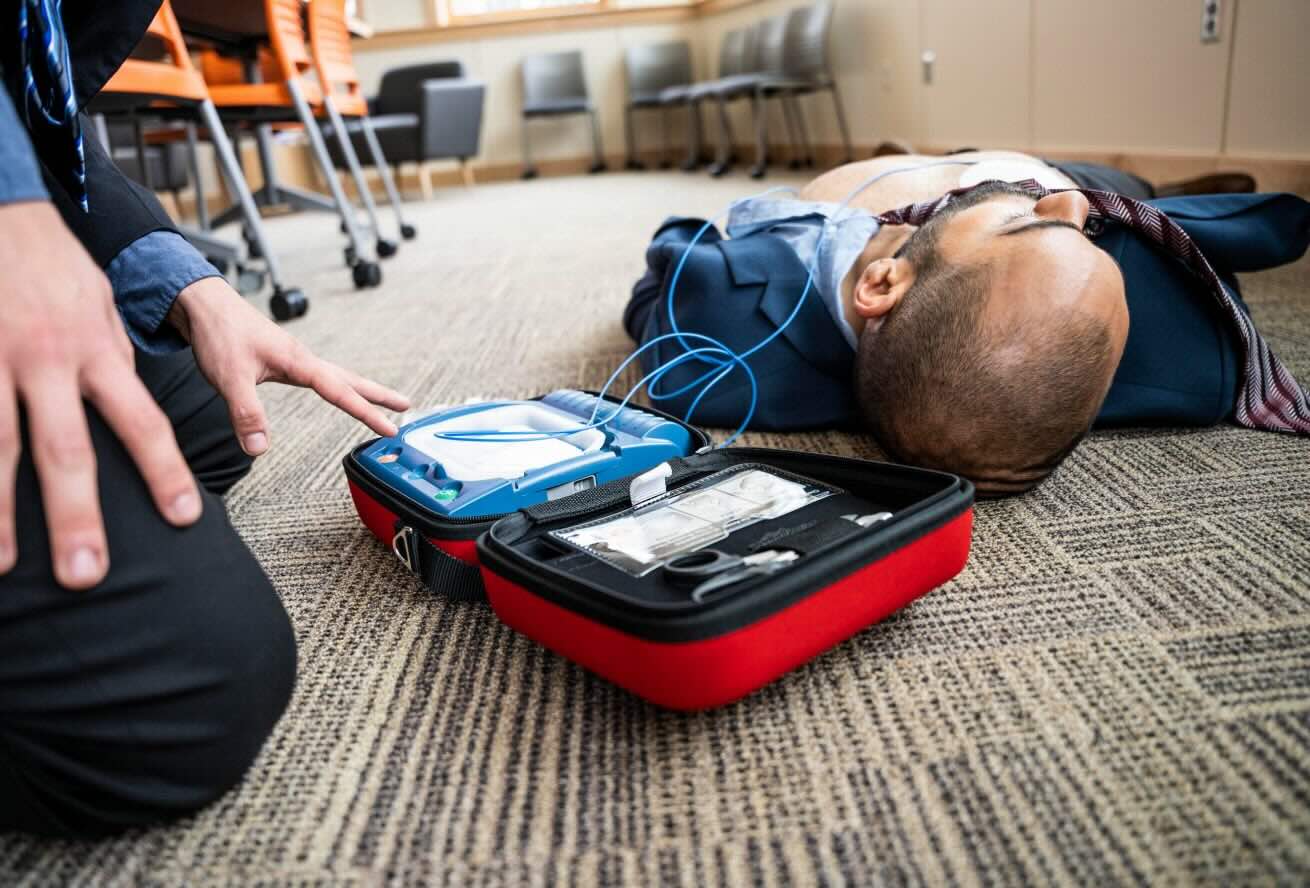
Bringing an Automated External Defibrillator (“AED”) into your workplace, school, home, or community space is an important step toward emergency preparedness. Out-of-hospital cardiac arrest claims approximately 350,000 lives in the United States each year, and survival rates in most communities remain below 10 percent.1 Survival can improve significantly with rapid, effective defibrillation from an AED.
When buying an AED, many people first compare specifications like price, battery life, shock energy, and IP ratings. Those details matter, but they do not tell the whole story. In most emergencies, the person using the AED may have little or no medical training. They may be scared, confused, and using an AED for the first time.
That means the most important question may not be, “which AED has the most features?” It may be, “which AED will help someone act quickly and correctly when every second matters?”
AED buyers may encounter recommendations based heavily on individual product features or specifications. Therefore, this guide provides an evaluation framework to help purchasers consider the clinical, usability, readiness, and operational factors most relevant to their environment.
Start with the emergency, not the product sheet
Imagine someone collapsing in a busy office lobby. A coworker runs to grab the AED. They have never opened one before.
They are trying to figure out what to do first, whether they are doing it correctly, and whether the device is working.
The AED can help reduce that uncertainty or add to it, which is why ease of use and clear guidance are important when evaluating AEDs.
What makes a good AED?
1. Ease of use: prescription status and intended users
Takeaways:
- FDA over-the-counter (OTC) approval provides added confidence because it indicates the device has been reviewed for OTC use without a physician’s prescription.
- According to the FDA database, only three AEDs in the United States are approved for OTC sale.
Among the most important questions to ask when selecting an AED is: can someone with little or no experience use the device correctly during the first critical minutes of a sudden cardiac arrest? In an emergency, an untrained responder is often scared, confused, and operating an AED for the first time.
FDA over-the-counter (OTC) approval provides added confidence because it indicates the device has been reviewed for OTC use without a physician’s prescription. Most AEDs in the United States require a physician’s prescription to purchase, unless specifically approved for OTC sale. The Philips HeartStart OnSite and Home AEDs are two of the three AEDs approved for OTC sale in the United States without a physician’s prescription Most AEDs in the United States require a physician’s prescription to purchase, unless specifically approved for OTC sale.
That OTC status is not simply a marketing position; it reflects the FDA’s review of that the device is appropriate for OTC use by the intended user population.
For many organizations, choosing an AED that has met this standard can help provide confidence that the device is designed to support the people most likely to use it when every second matters.
2. Ease of use: removing the guesswork
Takeaways:
- Some AEDs have a simple design using voice prompts and minimal buttons, while others include screens, feedback, and more features
- The key question: does your AED help an untrained user act faster?
All AEDs are designed to analyze a person’s heart rhythm and deliver a shock if needed, but every AED guides users in different ways.
Philips HeartStart AEDs rely on dynamic voice instructions. When the device is turned on, it begins talking and walks the user step-by-step through the rescue. Images for correct relative placement of pads are depicted on the pads for visual guidance. The device adapts voice instructions to the user’s actions and pace, helping guide the responder through each step. It will repeat and rephrase prompts if necessary and will skip over instructions if a user is moving fast. By repeating and rephrasing prompts when needed, the device helps keep the responder focused on the next step during a high-stress situation.
Other AEDs—such as the ZOLL AED Plus or ZOLL AED 3— incorporate a sequence of audio and visual prompts, with screens, lights, and CPR feedback.18,19 These devices may show text, graphics, or compression data to help guide the user. These additional features may be particularly valuable for trained responders.
Devices like LIFEPAK CR2 also include additional features, such as connectivity and continuous CPR support, designed to streamline response and integrate into larger emergency systems. These added features can be useful for trained responders as well.
Usability testing has shown that untrained users may make basic use errors, such as attempting to place electrode pads over clothing rather than on bare skin. This highlights why ease of use and clear instructions are important when selecting an AED for lay responders. Interface complexity can affect performance under stress. When comparing devices, consider whether each visual, auditory, or interactive feature has been shown through human-factors testing to help the intended users complete critical rescue tasks accurately and without unnecessary delay. For a trained responder, a screen conveys useful information; for an untrained bystander, it can compete for attention with the patient. A device that communicates primarily through clear voice prompts may help simplify the rescue process, allowing untrained responders to focus their attention on the next required action.
The best choice depends on who is most likely to use the AED. If you are buying a device that could be used by untrained users, you should consider the complexity of the device.
If you need an AED that might be used by anybody, ask: “Does this feature help an untrained person act faster, or does it give them more to think about?”
3. Energy vs. Current – what actually defibrillates the heart
Takeaways:
- Joules (shock energy) are often compared between AEDs, but higher numbers don’t mean better performance
- Current is the correct measure of effective defibrillation.
- Because of the way they were designed, the circuitry of some AEDs needs to use more energy than others to successfully defibrillate.
It is easy to assume that more joules (energy) mean a more effective AED, but that is not the case. Shock energy alone is not the best predictor of defibrillation effectiveness. Current is.
Imagine placing a 9V battery on your skin and holding it there. Theoretically, when the connectors of the battery are placed on a conductive surface, such as your skin, you would eventually absorb 360 joules of energy (it could take days, depending on the dryness of your skin). So why couldn’t a 9V battery restart a heart? Because joules alone do not determine whether a shock is effective. Although the total energy is high, a 9V battery does not produce sufficient magnitude of electrical current to defibrillate a heart during sudden cardiac arrest.
The American Heart Association and the European Resuscitation Council both note that it is current flow across the heart that achieves defibrillation, and that current correlates well with successful defibrillation and cardioversion.3 Defibrillation works by driving electrical current through the heart, interrupting the chaotic, uncoordinated firing of heart cells that defines ventricular fibrillation. The electrical current briefly interrupts the abnormal rhythm, giving the heart the chance to reset and beat normally again. It is current through the heart, not energy, that creates this effect.
Because of the way some AEDs are designed, their circuitry requires more energy than others to achieve sufficient magnitude of electrical current through the heart to restore normal activity. Some AEDs use an escalating energy protocol, delivering the first shock at 200 joules, the second at 300 joules, and the third and subsequent shocks at 360 joules. These devices rely on progressively increasing the amount of shock energy to the heart in the process of delivering the higher current. As a result, if a patient requires the device’s highest current output, the AED does not reach its maximum capability until the third shock—after additional rhythm analysis and CPR cycles.
In a time-critical emergency, additional analysis and CPR cycles means additional time may pass before the strongest current is delivered, while also potentially exposing the heart to substantially more energy over the course of a rescue. High-energy shocks (360J) are associated with post-shock myocardial dysfunction. While they may terminate the arrhythmia, they can “stun” the heart muscle, potentially compromising cardiac output during the fragile post-resuscitation period.13, 14, 17, 18
Philips HeartStart AEDs take a different engineering approach. Instead of relying on progressively higher energy levels to increase current, Philips’ SMART Biphasic waveform and high-voltage capacitor are designed to deliver the appropriate therapeutic current from the very first shock. With the high-voltage capacitor, Philips HeartStart AEDs can deliver sufficient magnitude of current with a dosage of 150-joules for every shock. In delivering lower-energy shocks, this approach minimizes post-shock myocardial dysfunction, which can minimize damage to the heart muscle when it is vulnerable. Philips SMART Biphasic therapy is supported by an extensive body of published clinical evidence spanning hospital and out-of-hospital use.
For most AED shoppers, the key takeaway is simple: do not choose an AED based on high shock energy. Instead, review the manufacturer’s clinical evidence, safety information, and instructions for use. A low-energy device delivers sufficient magnitude current to be effective.
4. Waveform, Patient adjustments, & Shock delivery
Takeaways:
- Defibrillation depends on more than shock energy. Waveform, delivery method, and how the device adjusts to the patient all matter.
- With the right waveform, you don’t need 360 joules to successfully defibrillate.
While every AED is designed to restore a normal heart rhythm, the method used to deliver that therapy can vary significantly.
Defibrillation efficacy depends on waveform characteristics, delivered current, patient impedance, and timing—not shock energy alone.
Some AEDs deliver a standardized shock waveform with little or no adjustment for the patient’s chest impedance. Because every patient presents a different electrical resistance based on factors such as body size, chest composition, and skin conditions, using the same waveform for every patient is a one-size-fits-all approach. These devices rely on a predetermined shock delivery strategy. Philips SMART Biphasic therapy uses an impedance-compensated biphasic waveform designed to deliver effective defibrillation using a non-escalating 150-J nominal energy. Because a patient’s electrical resistance can vary, the magnitude of current needed to effectively defibrillate may also vary. SMART Biphasic therapy measures the patient’s chest impedance and uses that information to automatically tailor the shock waveform to provide a customized current delivery waveform. By customizing waveform delivery to the patient, Philips HeartStart AEDs are designed to deliver the appropriate therapeutic current while maintaining a non-escalating 150-joule shock, to provide effective defibrillation without potentially damaging excessive energy. Clinical studies have demonstrated high defibrillation success with 150-J impedance-compensated biphasic therapy, while experimental studies provide additional evidence supporting the physiologic rationale for effective defibrillation with lower-energy waveform designs.
For most AED shoppers the key takeaway is simple: look beyond the maximum joules rating. Consider how the device delivers therapy, whether it adapts to the patient, and the clinical evidence supporting its ability to provide effective therapy from the very first shock.
5. AED Self-testing and readiness: the hidden risk
Takeaways:
- Most devices run automatic self-tests, but frequency varies (daily vs. weekly), which can leave gaps where readiness issues can go unnoticed
- Some AEDs check more components than others, including readiness of the pads gel.
Most people assume that if an AED is hanging on the wall, it is ready to use. That assumption is understandable, but AEDs still require regular readiness checks.
Most AEDs perform automatic self-tests and claim these self-tests verify AED readiness. However, self-testing can vary by device, and not all AED self-tests evaluate the same readiness factors. Philips HeartStart employs a patented electrode self-test designed to assess pad-gel readiness, independent of the printed expiration date.5,6,7 Only Philips HeartStart AEDs and the Cardiac Science G5 test pads gel readiness. Some AEDs only test to ensure a pad is plugged in; to our knowledge, only the ones listed above check whether the pad’s gel is ready. AED pads can expire, dry out, lose adhesion, or become damaged. If pads are not ready for use, the AED may not work properly during a rescue.
Additionally, Philips HeartStart, Stryker LIFEPAK, Defibtech, and Avive AEDs perform daily self-tests by default. Other AEDs only run weekly self-tests by default. A 7-day gap can leave a long time during which device failure can go undetected.
Selecting an AED that performs daily self-testing can help ensure the device is ready for use when it is needed.
6. Pediatric use: a small detail that can create confusion
Takeaways:
- AEDs handle pediatric mode differently: separate pads, a button, or a physical key
- Pad swapping requires having the right accessories available
- Button-based modes are quick but can be activated unintentionally
- Physical keys require a deliberate action but must be stored with the device and easy to find
Most AEDs use one of three mechanisms to defibrillate children: separate pediatric pads, a button-based infant/child mode, or a dedicated infant/child key. Each method has specific operational considerations and implications for emergency use.
Infant/Child Pads Cartridge
How it works: This method requires the user to remove the adult pads cartridge and insert a separate infant/child pads cartridge. Swapping pads sets the device for pediatric use.
Consideration: This approach to pediatric therapy requires that a second set of pads be stored with the AED.
Devices: Philips HeartStart HS1, HeartSine Samaritan PAD, Defibtech Lifeline, ZOLL AED Plus
Button-Based Modes
How it works: This method requires the user to press a button to activate infant/child mode. When the infant/child button is pressed, the device automatically reduces energy for pediatric use.
Consideration: This design can be convenient, because the user does not need to buy a separate set of pediatric pads – simply press the button to activate pediatric mode. However, accidental selection of pediatric mode for an adult could result in delivery of a lower-energy shock than intended for that patient.
During the chaos of a rescue, a responder may press a button while trying to follow device prompts, so mode-selection controls should be clear, deliberate, and easy to confirm. If an AED is placed in infant/child mode during an adult rescue, it would deliver energy calibrated for a pediatric patient, which would be insufficient energy that would prevent the generation of a sufficient current to fully depolarize the adult heart muscle (defibrillate).
The BeneHeart D1 underwent a product correction after a risk was identified that users could leave the AED in pediatric mode when treating an adult, potentially resulting in an ineffective lower-energy shock. This reported recall involving pediatric/adult mode selection illustrates why buyers should evaluate whether patient-type switching is clear, intuitive, and well understood by intended users.14
Devices: ZOLL AED 3, Stryker LIFEPAK CR2, Avive AED
Infant/Child Key
How it works: This method requires the user to insert a key into the device to activate infant/child mode. When the Infant/Child key is inserted, the device automatically reduces energy for pediatric use. The intention of an infant/child key is to ensure the user doesn’t accidentally put the AED into pediatric mode when the patient is an adult.
Considerations: This approach requires that an Infant/Child Key be purchased and stored with the AED. However, a delay in locating the key could slow treatment during a time-sensitive emergency.
Once inserted, the Infant/Child Key activates pediatric therapy without requiring a pad change.
The deliberate physical insertion provides a clear and intentional transition to pediatric mode, which may help reduce the risk of unintended activation compared with less deliberate mode-selection methods.
Devices: Philips HeartStart FRx
7. Connectivity: helpful for program management, but not always necessary
Takeaways:
- Some AEDs include connectivity features (Wi-Fi, cellular, remote monitoring) to track device readiness
- These features can help alert users to low battery, potential pads issues, or maintenance needs, with the intention of ensuring device readiness
- Connectivity type matters: Wi-Fi depends on network coverage, while cellular works independently but may require subscriptions
Without regular inspection or monitoring, an AED’s readiness can be affected by issues such as expired consumables, a low battery, or device maintenance needs. Remote monitoring is an important consideration for organizations managing many AEDs across multiple locations. For customers considering investing in AED device connectivity, evaluating connectivity methods and architectures is important.
Connectivity features can help program managers identify readiness-related issues, such as low battery, pads nearing expiration, or maintenance needs, so they can take timely action.
You can buy an AED where the connectivity is built into the device (embedded), or you can buy an AED that does not have connectivity built-in and add connectivity separately.
However, the type of connectivity matters. Wi-Fi-based AED monitoring depends on reliable network coverage, continued network access, and proper security configuration where the AED is installed. In some environments, such as hallways, stairwells, gyms, or remote areas, Wi-Fi coverage may be inconsistent. Network credential changes, certificate settings, access-point changes, or IT security policy updates may also affect connectivity.
Cybersecurity should also be considered. Published cybersecurity research has shown that enterprise Wi-Fi environments can be vulnerable to rogue access point, or “evil twin,” attacks when certificate verification or related security settings are not properly configured.16 For this reason, organizations evaluating Wi-Fi-based AED monitoring should involve their IT or cybersecurity teams to assess network configuration, authentication requirements, certificate management, and ongoing connectivity monitoring.
Embedded cellular connectivity avoids dependence on the customer’s Wi-Fi network, but it can introduce other long-term considerations. Because the cellular hardware is built into the AED, compatibility may depend on the cellular generation, frequency bands, carrier support, and regional network requirements available in the country where the device is deployed. For multinational organizations, this can make fleet planning more complex, since cellular infrastructure and network transition timelines may differ across markets.
As cellular networks continue to evolve, including the retirement of legacy 2G/3G networks and migration to 4G and 5G, customers should evaluate whether an embedded cellular AED will remain compatible with local network availability and future connectivity requirements over the device’s lifecycle.
Cellular monitoring avoids dependence on Wi-Fi, which can be spotty, inconsistent, and unreliable; however, it may involve additional monthly fees and will require adequate cellular signal. For multinational organizations, different cellular networks can also add complexity.
Some AED systems, such as the Philips HeartStart AEDs, use a separate connectivity accessory rather than building the technology into the AED itself, allowing the device to be monitored remotely, while making it easier to adapt to different network environments without replacing the AED.
With some AEDs you can add third-party connectivity later. If you aren’t sure whether you need connectivity now, you can start your program without it and see how it goes.
For community-based AED programs, especially those supported by first responders, some AED systems, such as the ZOLL AED 3 and Stryker LIFEPAK CR2, can transmit ECG and rescue-event data via their program management platforms. This may support review, documentation, care coordination, and post-event debriefing. However, data availability or data transfer does not necessarily lead to improved patient outcomes.
The key is to ensure your AEDs are ready for use. For a small office with one AED, visual inspection may be enough and connectivity may be unnecessary. For a school district, airport, corporate campus, or multi-site organization, remote monitoring may be more helpful.
AEDs that offer Wi-Fi and/or Cellular Connectivity: ZOLL AED 3, Avive Connect AED, LIFEPAK CR2
Third-party connectivity solutions are available from: Medic Assist, Readiness Systems
8. Consumable replacement under rescue conditions
Takeaways:
- Battery replacement can be just as important as battery life, because prolonged resuscitation events may require a quick battery swap to avoid interrupting patient care.
- Choose an AED with a simple, intuitive battery replacement design so a depleted battery can be exchanged quickly without unnecessary complexity during a rescue.
How easy is it to replace the AED’s battery if it dies? AED batteries are engineered for extended standby performance, typically four to five years from installation. Battery design also affects long-term serviceability. Consider expected standby life, readiness monitoring, replacement interval, whether the battery is user-replaceable, and the process required to restore the device to service when replacement is needed. In extended rescues, requiring multiple CPR cycles and defibrillation shocks, batteries may deplete. Quick and easy battery replacement helps minimize interruptions and supports the continuity of efficient patient care when every second counts.
Philips HeartStart AED batteries are designed for one-handed, tool-free replacement in seconds.
Some AED battery replacement procedures may require additional steps, tools (screwdriver, for example), or separate battery installation, which can add complexity during an emergency response.
When evaluating AEDs for high-demand environments, confirm what the battery replacement procedure requires and whether a backup can be stored and swapped easily.
9. IP ratings and real-world environments
Takeaways:
- IP ratings indicate resistance to dust and water ingress, but they do not by themselves define all conditions for safe use during a rescue.
- Many AED manuals still include warnings about water, metal surfaces, or nearby devices, even with high IP ratings
Many AED manufacturers advertise their devices’ IP ratings. IP rating stands for Ingress Protection rating; it classifies devices’ seals against the intrusion of foreign objects (especially dust) and moisture, with the first digit being objects and the second digit being moisture. A higher number indicates more protection.
However, an IP rating does not automatically mean the AED can be used under all wet or real-world rescue conditions. IP testing evaluates enclosure protection under defined test conditions, while the device IFU or operating manual provides the instructions, warnings, and limitations that apply during actual use.
Some AED manuals include warnings or limitations related to use around water, fluids, wet surfaces, metal surfaces, or other conductive surfaces. These instructions should be reviewed carefully, because they may affect how the AED is intended to be used in a real emergency.
The manufacturers of some high-IP-rated AEDs recommend moving a patient away from wet and metal surfaces before using the device.
- Avive Connect AED Owner’s Manual, page 6
“Avoid spilling any fluids on the Avive AED or its accessories. Do not use the Avive AED in puddles of water.”2
- HeartSine Samaritan PAD 350P User Manual, page 6
“The IP56 rating does not cover the immersion of any part of the HeartSine samaritan PAD in water or any type of fluid. Contact with fluids may seriously damage the device or cause fire or a shock hazard.”4
- LIFEPAK 1000 Operating Instructions, page 1-2
“Do not immerse any portion of this device in water or other fluids. Avoid spilling any fluids on device or accessories.”10
- LIFEPAK CR2 Operating Instructions, page 21
“Do not immerse any portion of this device in water or other fluids. Avoid spilling any fluids on device or accessories. Spilled liquids may cause the defibrillator and accessories to perform inaccurately or fail.”11
- ZOLL AED Plus Administrator’s Guide, page vi
“DO NOT use this unit near or within puddles of water.” “Move the victim away from electrically conductive surfaces prior to use of equipment.”19
For comparison, Philips HeartStart AED labeling provides specific instructions for use on wet and conductive surfaces, provided the user follows the stated precautions.
- Philips HeartStart FRx Instructions for Use, page 21
“It is safe to use the HeartStart FRx Defibrillator on a patient lying on a wet surface. Before doing so, remove the patient from standing water, such as a pool or bathtub. It is also safe to use the HeartStart OnSite Defibrillator on a patient lying on a conductive surface, such as a metal surface. It is important to dry the patient’s chest completely, so that the pads stick well to the dry, bare skin.” 8
- Philips HeartStart OnSite Instructions for Use, page 3-1
“It is safe to use the HeartStart OnSite Defibrillator on a patient lying on a wet surface. Before doing so, remove the patient from standing water, such as a pool or bathtub. It is also safe to use the HeartStart OnSite Defibrillator on a patient lying on a conductive surface, such as a metal surface. It is important to dry the patient’s chest completely, so that the pads stick well to the dry, bare skin.” 9
The practical takeaway:
- Do not rely on the IP rating alone.
- Review the manual/IFU for use warnings and limitations. You should be able to find the IFU on the manufacturer’s website.
- Match the AED to the environment where it will be stored and used.
- For environments where wet surfaces, metal surfaces, or fluid exposure may be foreseeable, confirm the device’s actual instructions for use before purchase
10. Mobile phones and electronic interference
Takeaways:
- Mobile phones are ever-present, and, in an emergency, someone is usually calling 911.
- Some AED manuals include guidance on turning mobile phones off or keeping them at a distance.
Mobile phones are commonly present during emergency response, including when someone is contacting emergency services. Because AED manufacturers may provide specific guidance related to mobile phones or other sources of electronic interference, organizations should understand these requirements before the device is placed into service.
Some AED manuals recommend you avoid operating the AED near mobile phones. The specifics, including the distance, vary by manufacturer.
- Avive specifies 1 foot (page 6).2
- HeartSine specifies 30 centimeters (Page 12).4
- Philips HeartStart HS1/OnSite specifies 30 centimeters (page 1-4) 9
- Philips HeartStart FRx specifies 30 centimeters (page 4) 8
- Stryker LIFEPAK 1000 instructs to avoid operating near cellular phones (page 1-2). 10
- Stryker LIFEPAK CR2 specifies 30 centimeters (page 22).11
- ZOLL AED Plus instructs rescuers to turn cell phones off entirely (Page vi).19
- ZOLL AED 3 specifies 30 centimeters (Page 41).20
If a manual recommends turning off mobile phones or ensuring that mobile phones are not in the vicinity, the organization should train responders on that recommendation and consider whether it is realistic in their environment.
11. CPR guidance: how much feedback is helpful?
Takeaways
- AEDs provide CPR coaching in different ways: simple metronome prompts vs. real-time feedback with sensors
- Metronomes offer clear, easy-to-follow rhythm guidance
- Feedback systems provide voice prompts to help improve compression depth and rate
Some AEDs use a metronome and basic voice prompts to help responders maintain the correct compression rhythm.
Others provide real-time CPR feedback using sensors that measure compression depth and rate.
Devices with CPR feedback can be especially valuable for trained responders who understand how to set up the feedback system and interpret the guidance provided. However, additional equipment, screens, sensors, or feedback indicators may add complexity that can lead to confusion, especially for lay responders or infrequent AED users who may be under stress during an emergency.
For untrained responders, the most helpful CPR guidance is often the simplest. A metronome provides a clear rhythm to follow, giving first-time responders actionable guidance without requiring them to interpret additional information from a screen, sensor, or feedback meter. In a stressful rescue, simple and direct prompts may help users stay focused on performing CPR and following AED instructions.
One feature commonly highlighted in AED comparisons is Stryker’s cprINSIGHT technology. cprINSIGHT enables ECG rhythm analysis during ongoing chest compressions and is designed to reduce interruptions in CPR. Published Stryker materials report reduced CPR pause times, increased compression fraction, and algorithm performance. However, the available published materials do not provide peer-reviewed clinical evidence demonstrating improved survival or neurological outcomes attributable to cprINSIGHT compared with conventional rhythm-analysis protocols. The cprINSIGHT white paper reports workflow and algorithm performance data rather than patient outcome data.12
When evaluating AED features, buyers should consider whether a technology’s intended benefits are supported by evidence demonstrating meaningful clinical outcomes and whether those benefits align with the needs of their responder population. For many organizations, particularly those relying on lay responders or infrequent users, ease of use, clear voice guidance, and straightforward CPR coaching may be more important considerations than advanced features whose impact on patient outcomes has not been established in published peer-reviewed studies. For trained responders, additional CPR feedback features may provide useful performance information, but these additional features may be less useful to untrained responders.
12. Total cost of ownership
Takeaways:
- The purchase price is only part of the cost—AEDs require ongoing expenses like replacement pads and batteries, and routine maintenance
- A lower purchase price doesn’t always mean lower cost over time—total cost should be evaluated over several years
- Purchasing from a reputable manufacturer can help ensure the availability of replacement pads and batteries
The purchase price is often the first thing buyers compare, but it is only one factor in the total cost of ownership. Total cost of ownership is a financial estimate that calculates the direct and indirect costs of an asset over its entire lifespan; a standard calculation includes acquisition costs, ongoing operation, maintenance, and end-of-life disposal minus any resale value. With AEDs, the main additional factors are consumables and subscriptions.
Over the life of the device, you’ll likely need to replace pads and batteries, and some AEDs require ongoing subscription fees for connectivity or remote monitoring. Training, maintenance, and program management can add additional costs that are rarely shown on comparison charts. Looking at the total cost of ownership provides a much more accurate picture than comparing upfront prices alone.
Total cost of ownership can be impacted by the availability of replacement pads and batteries. If the manufacturer can no longer supply replacement pads and batteries, because the manufacturer is no longer in business, that can impact your total cost of ownership. Philips HeartStart AEDs have been around for more than 30 years, however in that timeframe some other AED manufacturers have come and gone including Rapid Response Revival, the maker of the CellAED, and Access CardioSystems, the maker of the AccessAED.
13. Evaluating the Program Partner
Takeaways:
- Choose an AED partner, not just an AED supplier. The right reseller should provide ongoing program support, training, readiness management, and post-purchase service—not simply sell you a device.
- Look for proven clinical expertise. A trusted reseller should be able to clearly explain the clinical differences between AEDs, justify why they recommend a specific device, and help you make an informed purchasing decision based on patient outcomes rather than product features alone.
Choosing the right AED is part of building an effective AED program; the partner you buy it from can play an important role in long-term success by helping with training, maintenance reminders, expiration tracking, responder readiness, and support after a rescue.
AED resellers do not all offer the same level of expertise or service. Some sell many different AED brands without specializing in any one product, while others focus on a smaller selection of devices and can clearly explain the clinical differences, provide product-specific training, and offer ongoing program support. Choosing a knowledgeable reseller can help ensure your AED program remains effective long after the initial purchase.
When evaluating an AED reseller, don’t just ask what they sell—ask whether they have the clinical expertise to explain why they recommend a particular device and how it will support your organization’s needs over the life of your AED program. The questions below are intended to help you identify an appropriate reseller for your needs before a purchasing decision is made.
Question |
Why do you care? |
| How many AED brands do you represent, and what is your expertise for each portfolio? | Whether they have in-depth understanding of the products or are operating as a multi-brand catalog |
| Do you conduct a site assessment before recommending device placement? | Whether they treat AED placement as a custom process or a default installation |
| What product-specific training do you provide following installation? | Whether they function as a program partner or a delivery channel |
| How do you track electrode pad and battery expiration across a multi-device fleet? | Whether they have invested in program management infrastructure |
| What is your process following a rescue event at one of your customer sites? | Whether they provide sustained support or disengage after the transaction |
| Can you provide references from organizations you have supported for three or more years? | Whether they maintain long-term program relationships or conduct one-time transactions |
| Is your company affiliated with other companies that sell competing AED brands? | Whether they can offer a sincere and unbiased rationale behind their device recommendations |
A program partner who cannot address these questions with specificity may not have the operational infrastructure or commitment that a sustained AED program requires. A service provider that can address these questions is a good indicator their commitment will carry past the initial transaction.
How to choose the right AED for untrained responders
Choosing an AED is more than comparing specifications—it is an investment in your organization’s ability to respond confidently when every second counts. Throughout this guide, we’ve explored the factors that distinguish one AED from another, from ease of use and therapy delivery to readiness, maintenance, and long-term ownership costs. While no single feature determines which AED is best, each contributes to how effectively the device can support a rescue in the real world.
As you evaluate your options, consider how each of these factors aligns with your responders, your environment, and your organization’s needs.
- Ease of use: The best AED removes guesswork, guiding even an untrained responder through each step with clear prompts that help them act faster rather than giving them more to think about.
- Waveform and shock energy: Effective defibrillation depends on current, waveform design, and patient-specific adjustment—not simply the highest joule rating. Lower-energy therapy may do less damage to the heart during defibrillation, helping pave the way for an easier recovery.
- Self-testing and readiness: Daily self-tests that verify components like pads gel readiness help ensure the device is ready when it’s needed most.
- Pediatric use: Each method of switching to pediatric mode—separate pads, a button, or a key—carries trade-offs in convenience, accessory management, and the risk of accidental activation.
- Connectivity: Remote monitoring through Wi-Fi or cellular can streamline readiness management for multi-site programs, though smaller programs may find visual inspection sufficient.
- Consumables replacement: Battery replacement should be simple and fast, helping minimize interruptions to patient care if a battery needs to be replaced during a rescue.
- IP ratings and real-world environments: A high IP rating does not guarantee safe use on wet or metal surfaces, so you should review the device’s manual for real operating limits.
- Mobile phones and electronic interference: Because phones are almost always present during a rescue, consider each device’s specifications on separation distance and whether they are realistic in your environment.
- CPR guidance: Simpler coaching, such as a metronome, tends to be helpful for untrained responders, while real-time feedback tends to be helpful for trained responders.
- Total cost of ownership: The purchase price is only the beginning—the cost of replacement pads and batteries, accessories, and regular maintenance all contribute to the total cost over the life of the product.
- Evaluating the program partner: Choosing a knowledgeable AED program partner can help ensure your organization receives the expertise, training, readiness management, and ongoing support needed throughout the life of your AED program.
- Choosing the right AED for untrained responders: The best device is the one whose features make acting feel simple and clear when seconds count.
In an emergency, no one has time to learn a new device. The right AED is the one that meets your responders where they are—guiding them through each step with clarity and confidence. By weighing these features against the realities of your environment, you can choose a device that’s ready to perform when it matters most.
Disclaimer: Please consult your device Instructions for Use for indications, contraindications, and safety information.
ZOLL, AED Plus and ZOLL AED 3 are trademarks or registered trademarks of ZOLL Medical Corporation in the United States and/or other countries. LIFEPAK, LIFEPAK CR2, LIFEPAK 1000, HeartSine, samaritan and cprINSIGHT are trademarks or registered trademarks of Stryker Corporation or its affiliated entities. Avive, Avive AED and Avive Connect AED are trademarks of Avive Solutions, Inc. Defibtech and Lifeline are trademarks of Defibtech, LLC. Powerheart is a trademark or registered trademark of ZOLL Medical Corporation. BeneHeart is a trademark of Shenzhen Mindray Bio-Medical Electronics Co., Ltd. CellAED is a trademark associated with Rapid Response Revival. AccessAED is a trademark associated with Access CardioSystems. All other trademarks are the property of their respective owners. References to third-party products or trademarks do not imply affiliation with or endorsement by their respective owners.
References
- American Heart Association. (n.d.). CPR facts & stats. American Heart Association CPR & First Aid. https://cpr.heart.org/en/resources/cpr-facts-and-stats
- Avive Solutions, Inc. (2022). Avive AED owner’s manual (IFU-00367 Rev. 08), p. 6.
- European Resuscitation Council. (2010). European Resuscitation Council guidelines for resuscitation 2010: Section 3. Electrical therapies: Automated external defibrillators, defibrillation, cardioversion and pacing. Resuscitation, 81, 1293–1304.
- HeartSine Technologies. (2022). HeartSine Samaritan PAD 350P user manual (M0000006129-AC), p. 12.
- Jonsen, E., Powers, D., & Brink, G. (2010). Self-storing medical electrodes (U.S. Patent No. 7,822,488 B2). U.S. Patent and Trademark Office.
- Jonsen, E., Powers, D., Brink, G., & Koninklijke Philips Electronics N.V. (2005). Self-storing medical electrodes and method of making same (International Patent Publication No. WO 2005/092430 A1). World Intellectual Property Organization.
- Jonsen, E., Powers, D., Brink, G., & Koninklijke Philips Electronics N.V. (2006). Electrode and enclosure for cardiac monitoring and treatment (International Patent Publication No. WO 2006/046160 A1). World Intellectual Property Organization.
- Philips Medical Systems. (2021). HeartStart FRx defibrillator owner’s manual (Publication No. 989803139311), Chapter 3, Using the HeartStart FRx.
- Philips Medical Systems. (2023). HeartStart OnSite defibrillator owner’s manual (Publication No. 453564885701, Edition 16), pp. 1–4.
- Physio-Control, Inc. (2018). LIFEPAK 1000 defibrillator operating instructions (3205213-036), pp. 1–2.
- Physio-Control, Inc. (2019). LIFEPAK CR2 defibrillator operating instructions (3322738-028), p. 22.
- (n.d.). cprINSIGHT® analysis technology [White paper]. Stryker cprINSIGHT white paper
- Tang, W., Weil, M. H., Sun, S., Noc, M., Yang, L., & Gazmuri, R. J. (1999). The effects of biphasic and conventional monophasic defibrillation on post-resuscitation myocardial function. Journal of the American College of Cardiology, 34(3), 815–822.
- Tang, W., Weil, M. H., Sun, S., Jorgenson, D., Klouche, K., Morgan, C., & Gazmuri, R. J. (2004). The effects of biphasic waveform design on post-resuscitation myocardial function. Journal of the American College of Cardiology, 43(7), 1228–1235.
- Therapeutic Goods Administration. (2026, June 2). BeneHeart D1 AED: Non-rechargeable public automated external defibrillator. Australian Government Department of Health, Disability and Ageing. https://www.tga.gov.au/safety/recalls-and-other-market-actions/market-actions/beneheart-d1-aed-non-rechargeable-public-automated-external-defibrillator
- Tleuberdin, S., Satybaldina, D., Aidynov, T., Nurusheva, A., Issainova, A., & Abisheva, G. (2025). Vulnerabilities assessment of WPA3-Enterprise in Evil Twin attacks. In 2025 IEEE Annual Congress on Artificial Intelligence of Things (AIoT) (pp. 888–893). IEEE. https://doi.org/10.1109/AIoT66900.2025.00144
- Waveforms based on actual timing of a Philips HeartStart MRx Monitor/Defibrillator (M3535A).
- Weaver, W. D., Cobb, L. A., Copass, M. K., Hallstrom, A. P., Fahrenbruch, C. E., & Ray, R. (1982). Ventricular defibrillation: A comparative trial using 175 J and 320 J shocks. The New England Journal of Medicine, 307(18), 1101–1106.
- ZOLL Medical Corporation. (2016). AED Plus administrator’s guide (9650-0301-01 Rev. X), p. vi.
- ZOLL Medical Corporation. (2018). ZOLL AED 3 administrator’s guide (9650-000762-01 Rev. A), p. 41.
Save stories
Having a home AED helped save the person closest to his heart

Boot campers work as a team to save one of their own
Fitness fanatic saves a life at sports club during intense, unexpected ultimate workout

How one man’s sudden cardiac arrest was intercepted under the Friday night lights

Teamwork and quick thinking

AED gives Australian woman a new lease on life
How can we help you?
Contact a Heartstream sales representative
Get in touch